


Ships in 5 Days

Ships in 5 Days
Ships in 5 Days

Ships in 5 Days

Ships in 5 Days
View Collection Description
Buy Pure Katan Silk Kadhua (Kadhwa) Banarasi Sarees – The Ultimate Guide by Mayrake
There are sarees, and then there are pure Katan silk Kadhua Banarasi sarees — a category so extraordinary, so deeply rooted in Indian royal heritage, that calling them merely "clothing" feels like an understatement. These are woven masterpieces. They are living history wrapped in six yards of pure silk and shimmering gold zari.
If you are on a journey to buy pure Katan silk Kadhua (Kadhwa) Banarasi sarees, whether for your wedding, a daughter's bridal trousseau, a special family occasion, or simply because you recognise the value of owning something truly timeless — this guide is written for you.
At Mayrake, we are deeply passionate about preserving and celebrating India's most treasured textile traditions. Our curated collection of pure Katan silk Kadhua Banarasi sarees is sourced directly from the master weavers of Varanasi — the same families who have kept this extraordinary craft alive for generations. In this guide, we will walk you through everything you need to know before making your purchase.
The Royal Legacy of Banarasi Sarees — A Craft That Survived Centuries
Varanasi, also known as Banaras or Kashi, is one of the oldest living cities on earth. It is also the birthplace and spiritual home of the most celebrated handwoven sarees in Indian history — the Banarasi saree.
The tradition of weaving silk sarees in Varanasi dates back over five hundred years, with records tracing the craft to the Mughal era when Persian artisans brought their intricate brocade weaving techniques to the royal looms of Banaras. The Mughal emperors — particularly Akbar — were great patrons of Banarasi weaving, and this patronage elevated the craft to extraordinary heights of artistic refinement.
Over centuries, Banarasi weavers developed their own distinct vocabulary of motifs — floral jaal patterns, Mughal-inspired butas, kalga and bel borders, shikargah hunting scenes, and intricate lattice work. These motifs, many of which are still used today, represent a living cultural language that tells the story of India's composite heritage.
The GI (Geographical Indication) tag awarded to Banarasi sarees in 2009 ensures that only sarees woven in Varanasi and a few neighbouring districts can legitimately carry the Banarasi name — protecting both the weaver community and the consumer.
What Is Katan Silk? Understanding the Soul of the Saree
Among all the fabric types used in Banarasi weaving, Katan silk holds the highest position of prestige. Understanding what Katan silk is helps you appreciate why these sarees command such reverence — and why they are worth every rupee or dollar invested.
Katan (also spelled Kattan) is a pure, tightly twisted silk yarn — one of the strongest and most lustrous forms of natural silk available. Unlike dupion or raw silk which have a slubbed, textured surface, Katan silk is woven with tightly wound threads that produce a smooth, incredibly dense, and brilliantly glossy fabric.
Key characteristics of Katan silk include:
- Exceptional luster: The tight weave creates a mirror-like sheen that is immediately visible and deeply luxurious.
- Structural weight: Katan silk sarees have a satisfying heft that gives them excellent draping quality — they hold their pleats beautifully and flow with controlled grace.
- Durability: Tightly woven Katan silk is remarkably strong. With proper care, a pure Katan silk saree can be passed down through multiple generations.
- Breathability: Despite its density, natural silk's protein structure makes Katan fabric temperature-regulating — cool in warm weather and warm when the temperature drops.
- Zari integration: The tight base weave of Katan silk provides the ideal surface for weaving in gold or silver zari, allowing metallic threads to be incorporated with extraordinary precision and detail.
What Is Kadhua (Kadhwa) Weaving? The Technique That Sets These Sarees Apart
If Katan silk is the body of these extraordinary sarees, then Kadhua weaving is their soul. The Kadhua (also written Kadhwa) technique is what distinguishes the finest category of Banarasi sarees from all others — and what makes them among the most labour-intensive handwoven textiles in the world.
In conventional weaving, extra weft threads (used for creating patterns) are carried across the entire width of the fabric in a continuous manner. This is efficient but limits pattern precision. In Kadhua weaving, however, each individual motif is woven using a separate, individual bobbin of yarn for that specific motif alone.
This means:
- Each buta, flower, or paisley is woven as an individual, isolated element — never connected to other motifs by floating threads on the reverse.
- The reverse side of a Kadhua saree is as clean and neat as the front — there are no loose, floating threads between motifs.
- The result is that every single pattern element is precisely, independently woven into the fabric with exceptional sharpness and definition.
This technique requires immense skill and patience. A single Kadhua Banarasi saree can take anywhere from three weeks to six months to complete, depending on the complexity of the design. Sarees with a dense all-over jaal (lattice) pattern woven entirely in the Kadhua style are among the rarest and most valuable handwoven textiles ever produced.
How to identify genuine Kadhua weaving:
- Check the reverse side — motifs should appear clean with no loose or floating threads between them.
- Genuine Kadhua sarees feel slightly heavier due to the density of individual weft insertions.
- The motifs on the front will have exceptional sharpness and three-dimensional depth.
The Most Iconic Designs in Pure Katan Silk Kadhua Banarasi Sarees
The design vocabulary of Banarasi Kadhua sarees is rich, diverse, and deeply symbolic. Here are the most celebrated design styles you will encounter when shopping:
Kadhua Jangla
Considered the pinnacle of Banarasi weaving, Jangla sarees feature an intricate all-over pattern of intertwined floral vines, leaves, and blossoms spread across the entire body of the saree. The sheer density of Kadhua-woven motifs in a Jangla saree makes it one of the most time-consuming and valuable Banarasi creations.
Kadhua Butidar
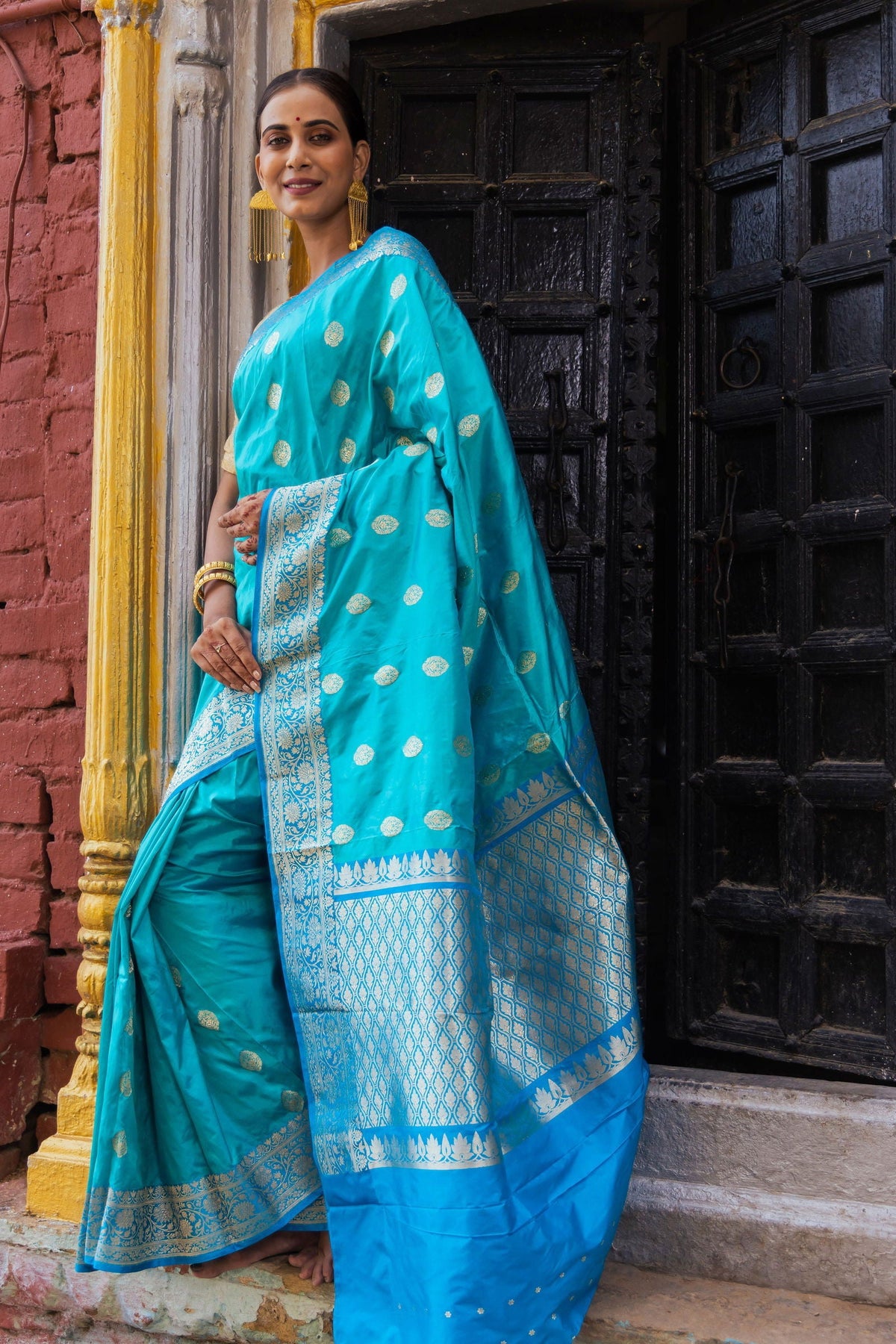
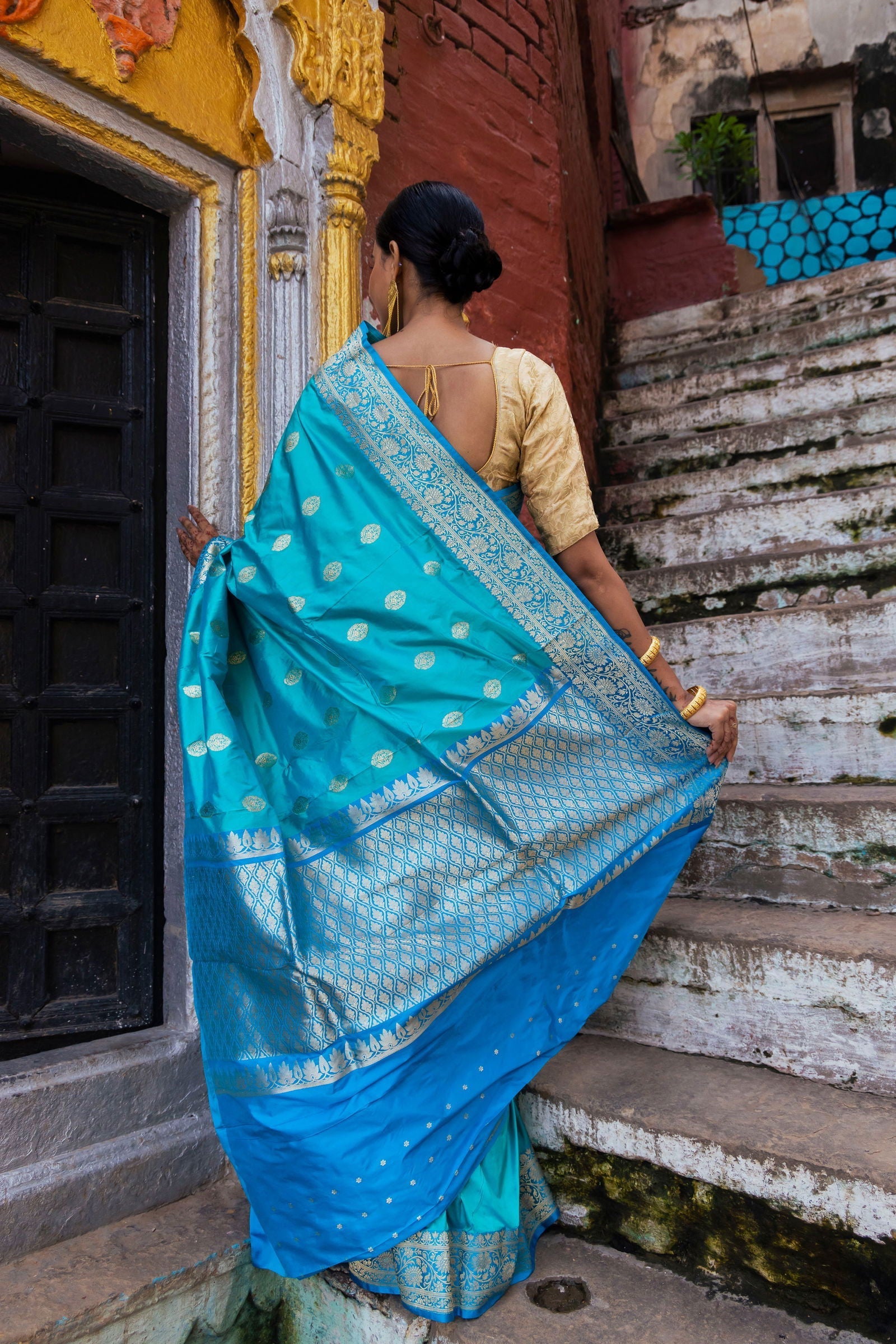
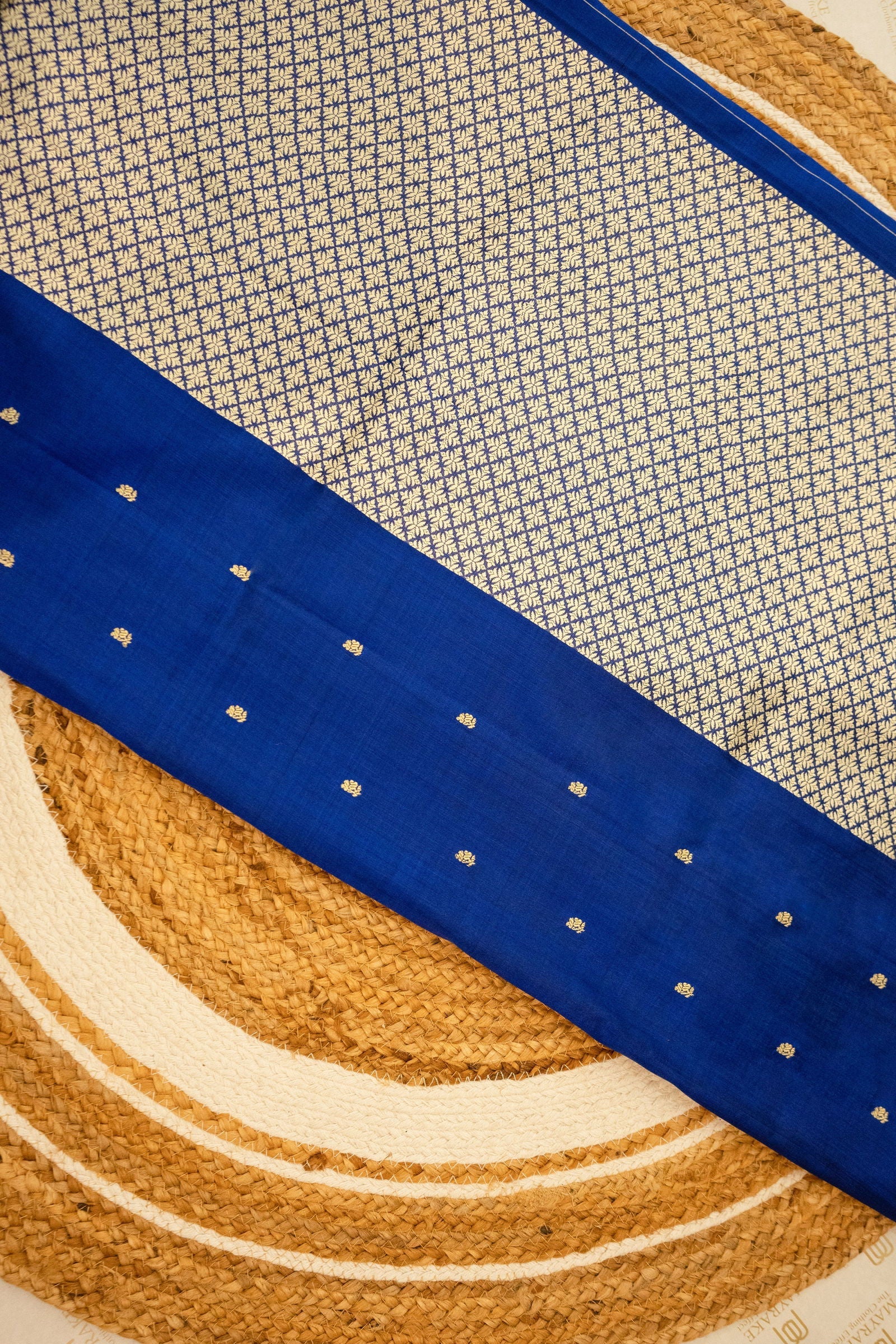
Butidar sarees are decorated with scattered individual butas (small floral or paisley motifs) spread elegantly across the saree body. These are slightly more understated than Jangla sarees but equally refined — perfect for women who prefer a balance between richness and elegance.
Kadhua Shikargah
Shikargah translates to "hunting ground" — and these sarees feature extraordinary narrative scenes of forests, animals, hunters, and birds woven across the fabric. Shikargah Kadhua sarees are extremely rare, extraordinarily detailed, and highly collectible.
Kadhua Tanchoi
A style influenced by the Chinese weaving traditions brought to Varanasi by Parsi merchants in the 19th century, Tanchoi Kadhua sarees feature self-colored patterns woven in the same color family as the base fabric — creating a subtle, sophisticated, tonal embossed effect.
Kadhua with Meenakari
Meenakari involves the addition of colored silk threads woven alongside the gold zari in individual motifs, creating a jewel-like polychromatic effect. Kadhua meenakari sarees are breathtakingly vibrant and represent the ultimate in Banarasi weaving complexity.
Why Pure Katan Silk Kadhua Banarasi Sarees Are a Bridal Essential
In Indian wedding culture, a Banarasi saree is far more than a garment — it is a ritual. Across nearly every Indian community, gifting a bride a pure Banarasi saree is considered one of the most auspicious and beloved wedding traditions.
For brides, a pure Katan silk Kadhua Banarasi saree represents:
- Prosperity and blessing — gold zari has been associated with prosperity and divine grace in Indian culture for millennia.
- Family heritage — these sarees are routinely passed from mother to daughter as heirloom treasures.
- Bridal confidence — the weight, structure, and luminosity of a Katan silk saree gives the bride an unmatched presence and poise.
- Timeless style — unlike fashion trends that fade, a Banarasi Kadhua saree is as relevant and breathtaking at a 2025 wedding as it was at one fifty years ago.
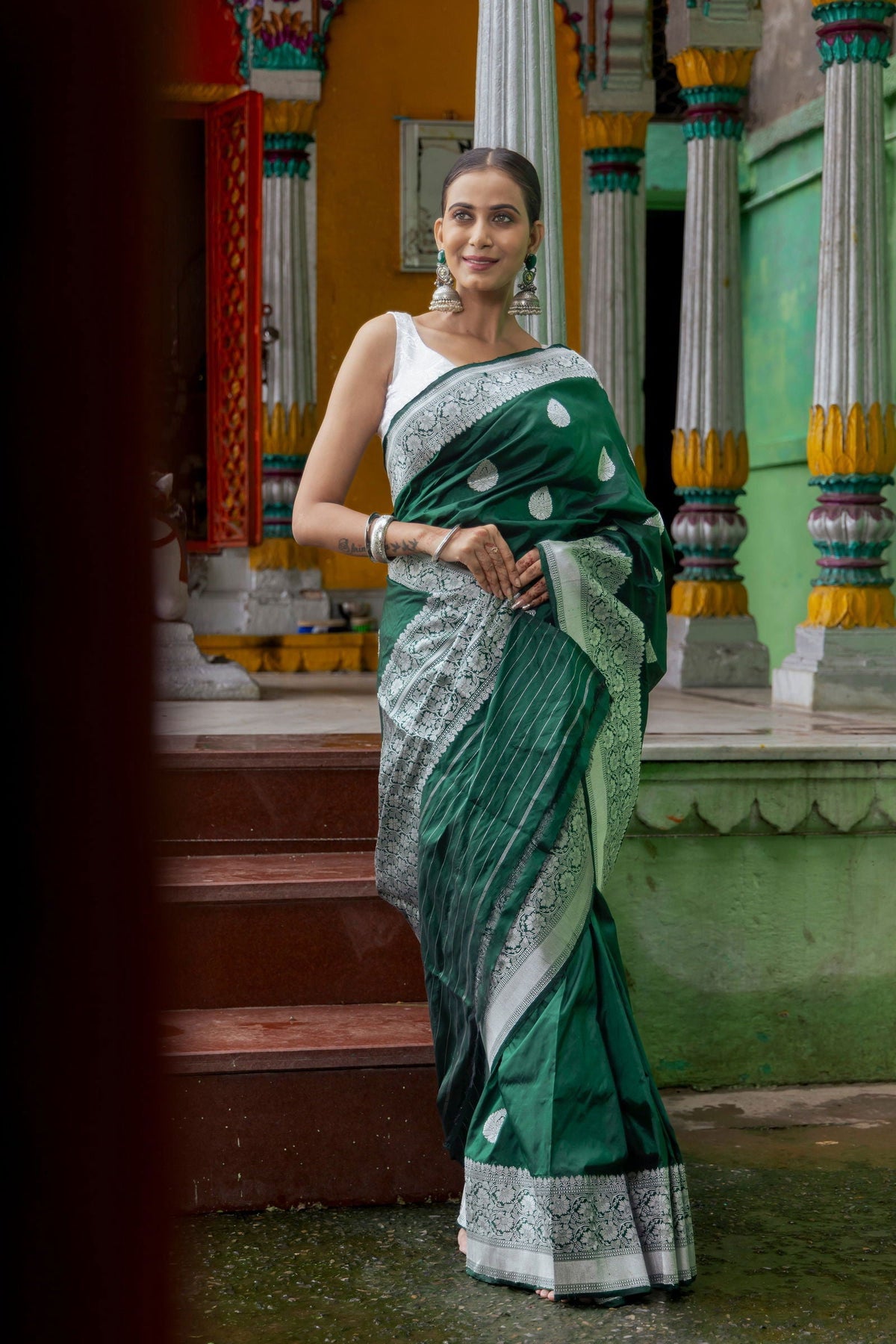
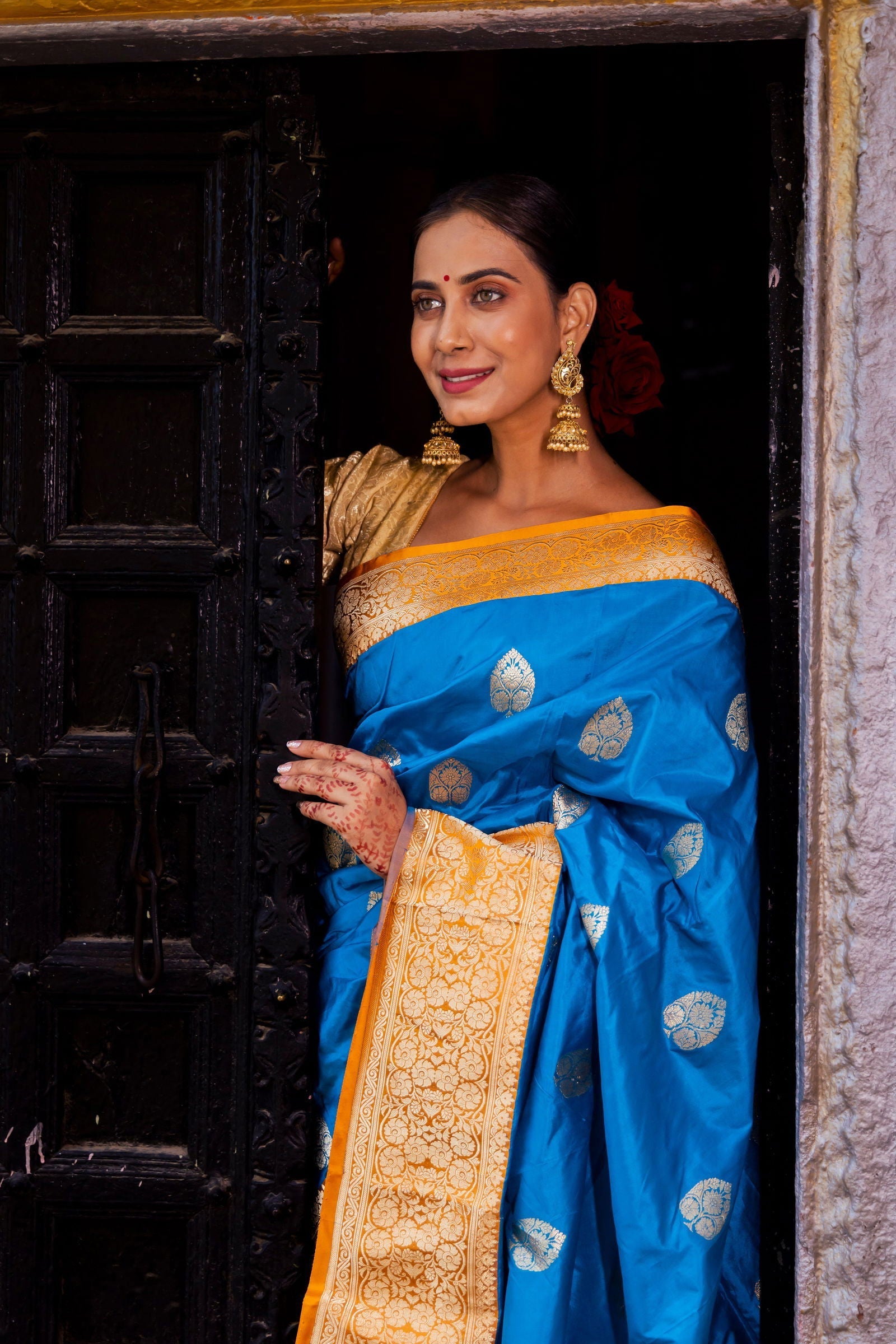
The most popular bridal colors in Katan Kadhua Banarasi sarees include classic red, deep crimson, bridal gold, royal blue, forest green, and rich magenta — each traditionally associated with auspiciousness and celebration in different Indian communities.
Mayrake – Your Most Trusted Source to Buy Pure Katan Silk Kadhua Banarasi Sarees
With counterfeit and machine-made imitations flooding the online marketplace, knowing where to buy authentic Katan silk Kadhua Banarasi sarees is critically important. At Mayrake, authenticity is not a marketing claim — it is a foundational commitment.
Here is why Mayrake is the right choice:
Direct Weaver Partnerships
Mayrake sources its Banarasi collection directly from verified master weavers and their family workshops in Varanasi. This direct relationship ensures that every saree you purchase is genuinely handwoven on a traditional pit loom — not machine-replicated.
Transparent Authentication
Every pure Katan silk Kadhua Banarasi saree in the Mayrake collection is accompanied by detailed product information including weaving technique, fabric composition, zari type, and design origin. We believe informed customers make the happiest buyers.
Heirloom-Grade Quality Control
Before any saree enters the Mayrake catalog, it passes through a rigorous quality inspection. Thread count, zari quality, weave density, selvage finish, and color fastness are all evaluated to ensure that only heirloom-worthy pieces reach our customers.
Worldwide Shipping with Careful Packaging
Mayrake ships pure Katan silk Kadhua Banarasi sarees worldwide with insured, tracked delivery. Each saree is wrapped in traditional muslin cloth inside a secure outer packaging to protect the delicate zari work and silk fabric during international transit.
Personalized Customer Support
Choosing a Katan silk Kadhua Banarasi saree is a significant decision. Mayrake's knowledgeable support team is available to help you navigate design options, weaving techniques, blouse matching advice, and care instructions — making your experience feel personal and guided rather than transactional.
How to Verify Authenticity When Buying Katan Silk Kadhua Banarasi Sarees Online
The market for Banarasi sarees — particularly online — has a troubling abundance of imitations. Here are practical steps to protect yourself as a buyer:
- Check the reverse side: In a genuine Kadhua saree, the back should be clean with no floating threads between motifs.
- Feel the weight: Pure Katan silk has a distinctive, satisfying heft. Very light sarees claiming to be pure Katan are almost certainly blended or synthetic.
- Ask for weaving certificates: Reputable sellers can provide documentation or certifications confirming handwoven origin.
- Examine the zari: Real gold or silver zari has depth and a warm, rich glow. Metallic polyester imitations tend to look flat and overly bright.
- Buy from GI-certified or verified sources: Platforms like Mayrake that source directly from Varanasi weavers offer far greater authenticity assurance than generic marketplaces.
Caring for Your Pure Katan Silk Kadhua Banarasi Saree
A genuine Katan silk Kadhua Banarasi saree, properly cared for, can outlast its owner and become a treasured family heirloom. Here is how to protect your investment:
- Dry clean only — never machine wash or hand wash. The combination of natural silk and real zari requires professional dry cleaning exclusively.
- Store in a cotton or muslin cloth — never plastic. Natural fibers need to breathe; plastic traps moisture and can cause zari to tarnish.
- Refold periodically along different lines to prevent permanent crease damage to the silk and zari.
- Keep away from perfume and deodorant — direct contact with chemicals can stain silk and corrode zari threads.
- Use neem leaves or cedar blocks in storage — these natural moth repellents protect the saree without the chemical risk of naphthalene balls.
- Air the saree in a shaded, well-ventilated area every few months to keep the fabric fresh and prevent yellowing.
Final Thoughts – Own a Piece of India's Greatest Textile Legacy
To buy a pure Katan silk Kadhua (Kadhwa) Banarasi saree is to become a custodian of one of humanity's most extraordinary living art forms. Every thread tells a story. Every motif carries the imprint of a master weaver's hands. Every yard of fabric embodies a tradition that has survived empires, time, and the relentless march of industrialization.
At Mayrake, we are honored to serve as the bridge between these extraordinary Varanasi artisans and saree lovers across the world. When you choose Mayrake for your Katan silk Kadhua Banarasi saree, you are not just making a purchase — you are making a statement about the value of authenticity, craftsmanship, and cultural heritage.
Your heirloom is waiting.
👉 Explore Mayrake's Pure Katan Silk Kadhua Banarasi Saree Collection
© 2025 Mayrake. All Rights Reserved. | www.mayrake.in
Frequently Asked Questions
What makes pure Katan silk different from other silk varieties used in Banarasi sarees?
Katan silk is made from tightly twisted pure silk yarn, producing an exceptionally smooth, dense, and lustrous fabric. Unlike raw or dupion silk which have textured surfaces, Katan silk offers a mirror-like sheen, superior weight, extraordinary durability, and the ideal base structure for intricate Kadhua zari weaving.
How is Kadhua (Kadhwa) weaving different from other Banarasi weaving techniques?
In Kadhua weaving, each individual motif is created using a separate yarn bobbin, making every buta or pattern element completely independent. This produces a clean reverse side with no floating threads. The result is sharper, more precise motifs with exceptional depth, making Kadhua sarees the most refined and valuable Banarasi variety.
How long does it take to weave one pure Katan silk Kadhua Banarasi saree?
Depending on design complexity, a pure Katan silk Kadhua Banarasi saree can take anywhere from three weeks to six months to complete. Sarees with dense all-over jaal patterns or intricate Meenakari work take the longest, as every single motif is individually and painstakingly woven by a skilled master weaver.
Are pure Katan silk Kadhua Banarasi sarees suitable for all occasions or just weddings?
While Katan silk Kadhua Banarasi sarees are most beloved for weddings and bridal wear, they are equally appropriate for festivals like Diwali and Navratri, religious ceremonies, engagement parties, and milestone anniversary celebrations. A simpler butidar design in a subtle color works beautifully for formal and semi-formal occasions too.
How do I identify a genuine Kadhua Banarasi saree versus a machine-made imitation?
Check the reverse side — genuine Kadhua sarees show clean, neat motif backs with no loose floating threads between designs. Authentic Katan silk also has a distinctive weight and warmth. Purchase only from verified sources like Mayrake that provide transparent information about weaving technique and fabric composition.
What are the most popular colors in pure Katan silk Kadhua Banarasi sarees for brides?
Bridal red, deep crimson, and traditional gold are the most classic choices for brides across North and South India. Royal blue, forest green, rich magenta, and ivory with gold zari are also extremely popular. The choice often reflects regional customs, family traditions, and the bride's personal style preferences.
Can I buy pure Katan silk Kadhua Banarasi sarees as gifts for international recipients?
Absolutely! A pure Katan silk Kadhua Banarasi saree is one of the most prestigious and culturally meaningful gifts you can give. Mayrake offers secure international shipping with careful packaging, making it perfectly practical to send these treasured sarees as wedding gifts, anniversary presents, or bridal trousseau pieces worldwide.
What blouse fabric pairs best with a pure Katan silk Kadhua Banarasi saree?
A matching Katan silk blouse is the most traditional and harmonious pairing. Brocade or Banarasi fabric blouses in a contrasting color are also excellent choices. For a contemporary look, a raw silk or velvet blouse in a deep jewel tone complements the richness of the Katan silk saree beautifully without overwhelming it.
How should I store a pure Katan silk Kadhua Banarasi saree to keep it in perfect condition?
Always store in clean cotton or muslin cloth — never plastic. Refold along different lines every few months to prevent permanent creases. Keep away from direct sunlight, moisture, perfumes, and chemical moth repellents. Use natural neem leaves or cedar blocks to protect from moths and insects without damaging the delicate silk or zari.
Why should I choose Mayrake to buy pure Katan silk Kadhua Banarasi sarees?
Mayrake sources exclusively from verified master weavers in Varanasi, ensuring every saree is genuinely handwoven and authentically crafted. With transparent product descriptions, rigorous quality control, careful international packaging, and responsive customer support, Mayrake delivers an experience that honors both the buyer and the extraordinary craft of Banarasi weaving.